Pages

Showing posts with label literacy. Show all posts

Wednesday, November 22, 2017

The Nuts and Bolts of Preparing Students for NaNoWriMo

This is part of a SERIES of posts about engaging my students in National Novel Writing Month, a.k.a. NaNoWriMo, a challenge to complete the manuscript for a novel in the course of a month.
 
NaNoWriMo's winding down and I've been continuously impressed by my sophomore students' level of energy and excitement around completing their first-ever novels. My last post in this series will include their voices and their individual experiences-- the positive ones as well as a few that may serve as cautionary tales (if you're considering trying this yourself). In the meantime, these next few posts will focus primarily on the instructional planning and the supports that were in place before, during, and after November's write-fest. This one details the prep leading up to the first day of NaNoWriMo. Enjoy!
LATE SEPTEMBER PREP


Phase 1: The Hero's Journey

  • Each step and archetype of the hero's journey was explored through multiple forms of storytelling such as mythology, literature, poetry, song lyrics, and films.
  • Students were challenged to reflect on their own lives relative to the hero's journey and the archetypes that impact them as hero's of their own story.
OCTOBER PREP

Phase 2: Genre Study

  • Using a Google Form, students generated a list of their favorite genres of fiction.  They then voted on the one genre from the list that they'd use for a genre study and how the hero's journey unfolds in the narrative.  This year's choice: fantasy fiction.
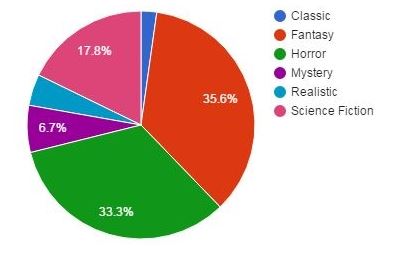
  • Individuals proposed novels to use for the study by creating "billboards" and adding them to a class slideshow so that students could vote for the top six choices. 

  • Book clubs (literature circles) were formed for each of the 6 novels. Each book club determined their own reading schedule, developed a contract conveying group norms, members' roles, and expectations, and met at least once a week to discuss the novel.  Students were given class time to read (individually or in groups, depending on the group's agreed-upon norms) and annotate with the purpose of identifying stages of the hero's journey and whatever archetypes they could find.

  • Book clubs were tasked with completing a slideshow by the end of the three weeks that detailed the fantasy novel's hero journey and archetypes.  This essentially created the conditions that made group discussion more purposeful in that members had to agree to which hero stages they would include in their group's presentation.
Phase 3: Hello NaNoWriMo!
  • As groups engaged in their genre study, they were given a number of writing prompts for creating their own hero journeys.  These "zero drafts" were shared on their blogs and during "open mic" sessions at the end of class, which-- in turn, fostered a supportive culture for sharing and providing constructive feedback on ideas. 
WriteAbout.com is where our blogs live
  • NaNoWriMo was introduced by sharing fun videos about the annual event created by experienced NaNoWriMo participants. 

  • A parent letter was sent home introducing NaNoWriMo with a request for prize donations (for word wards, goal achieving, etc)
  • Students engaged in lessons and activities provided by the NaNoWriMo site along with a free student booklet. I used most of it but modified the lessons so that they were on Google docs rather than an edit-able pdf file.

  • As the Book Clubs went into their final stretch (mid-October), students chose one of their stories (from their collection of zero drafts) to further develop by creating character profiles and by experimenting with different ways of organizing plot outlines.

LAST WEEK OF OCTOBER 
  • Students had a couple of practice writing sprints to guage how many words they could type within the span of an hour, and-- using those numbers, determined which writing goal they would choose: 15K, 30K, or 50K, which was then broken down into daily word count goals (500, 1000, or 1667).
  • Calendars were distributed to help time manage and keep track of word counts and goals.

  • Contracts were signed (the contracts NaNoWriMo provides in the student booklets are both funny and reassuring to first-timers).
  • In the final days of October, having already developed the concept and characters for their novels, students created book covers that included graphics and an enticing blurb for the back cover. These were posted on a discussion board to generate excitement and to provide positive feedback as a writing community.
Example Book Cover
  • On the last day of October, students were encouraged to bring a writing totem to school for the start of NaNoWriMo (totem = good luck charm).  Some of the totems were profoundly personal. Nicole chose to write the story of her grandfather's army days and so her totem was his actual dog tag (more stories like that to come...)
Students' totems from both classes
I hope this has served to help rather than overwhelm. As soon as I have some time freed up, I'll add links to most of what's listed above.  In the meantime, if there's any particular detail you'd like me to elaborate on in a separate post or a resource you'd like to have access to, please let me know in the comments.

Next: Instructional Supports Provided to Students during NaNoWriMo

Tuesday, October 31, 2017

Diving Into NaNoWriMo as a First-Timer (Whilst Holding a Hundred Young Writers' Hands)

This is part of a SERIES of posts about engaging my students in National Novel Writing Month, a.k.a. NaNoWriMo, a challenge to complete the manuscript for a novel in the course of a month.


Happy NaNoWriMo Eve!  

Tomorrow marks the first day of the 18th annual National Novel Writing Month, a "fun, seat-of-your-pants approach" to writing the complete first draft of a novel in 30 days. 

I've only seventeen regrets in my life and they are that I've missed NaNoWriMo for the past seventeen years. I'm done procrastinating and, b'gosh, I'm going to write that novel that's been knockin' on my belly's door, the one that costs me hundreds of dollars each year in therapy co-pays for ignoring it!  Time to clear up this creative constipation.  This is happening.

I'll be a newbie-- not just as a novel writer, but as a teacher who's holding the hands of her entire sophomore Humanities class as we all take the proverbial leap en masse.

Oh, geesh...I'm realizing the full weight of this endeavor as I write.  Goddess help me.  Rubber duckie totem, where art thou?  

Ah, there you are. I'll be okay now.  So I'm a little petrified.  That's normal, right?  It's probably good that, whilst modeling the writing process, I'm able to also model the fear and trepidation that comes with setting a daily word count of 1667 and committing to a total of fifty thousand words [rubs duckie].

I'm thinking if I crank out a few short blogs each week to share my experience, it might be useful to other first-time educators who are going in as blind as I am.  

It won't be a perfect novel.  It won't be even the least bit pretty. Hell, it might not even get done, but if I'm asking a hundred teens to try it and I'm cheering them on and lighting all kinds of fires beneath their feet, the least I could do is jump in there with them so we can all suffer, bleed, laugh, and celebrate together.  

It's the write thing to do.  

Part IIThe Nuts and Bolts of Preparing My Students for NaNoWriMo 

Saturday, February 13, 2016

Resource Review: Student News Daily, An Ironic Study in Media Bias

As an educator, I love free quality resources my students can easily access, but I've learned--sometimes the hard way, to be much more discerning of what it is I'm curating for them.  

Recently, I came across a site that came highly recommended as a news aggregator geared specifically toward high school students. Upon first look, it seemed promising as one of many choices I could offer students for exploring current events. It even had resources for spotting bias in media, which made me think the site's creators had a purpose similar to my own; challenging students to think critically while consuming the news.  That's what compelled me to want to know more and to look deeper, and that's why the results were so disappointing.    

Student News Daily purports to deliver to its young readers "fair and unbiased" news. It has all kinds of resources teachers love to work into their daily activities, including weekly features on political cartoons, quizzes, and vocabulary.


Sounds full o' awesome, right?  I thought so, too, so as with any news source, I checked the "About" page and couldn't find any humans or organizations attached to it. Here's what I did find on the Media Bias page:

Media Bias

Since citizens cannot cast informed votes or make knowledgeable decisions on matters of public policy if the information on which they depend is distorted, it is vital to American democracy that television news and other media be fair and unbiased.
In a recent Gallup Poll, the majority of Americans believe that the mass media slant reports in favor of the liberal position on current issues.
[The bias] is not the result of a vast left-wing conspiracy – [there is] an unconscious “groupthink” mentality that taints news coverage and allows only one side of a debate to receive a fair hearing.  When that happens, the truth suffers.
As a Language Arts educator, I teach my students about text structure.  That grey line hugging the text along its indented margin is called a block quote and its purpose is to indicate to the reader that the text is a longer-than-usual direct quote.   In this case, however, the grey line's used incorrectly. It's misleading in that, visually, it suggests the content is being attributed to someone other than the publishers of the site.  But there's no attribution. There was the Gallup link, glaring at me as a link...could it be Gallup? I clicked, and no, it wasn't from Gallup.

First, here's what startled me about the pseudo-quote: It says, in so many words, that a majority of Americans believe mass media to have a liberal slant. True enough, says the Gallup data (in the depths of the link)-- the perception exists.  But it appears Student News Daily would like you to read that as "Yo, left-wing bias is for realz" rather than just the mere perception of it. Embedded in the statement is the assumption that left-leaning bias in the media is a
 foregone conclusion. In fact, as far as Student News Daily is concerned, they know the reason for it and they're happy to explain: Not to worry, they tell their young readers. It's not evil lefty conspirators that are at play here, but rather it's group think on the part of sheep-y liberals.  You are safe from leftist mind control as long as you--the student, use Student News Daily as your news source because we are fair, unbiased, and free of left-leaning zombie herds

One has to see the humor in what follows; "Types of Media Bias," including media spin, which the above fuzzy logic is a marvelous example of!  I could've saved myself a whole lot of speculatin' brain cells by reading the very bottom of the page:


The true irony here is that much of the content on the site can be pointed to as examples for the various "Types of Media Bias" described on that particular page, with special attention to Bias of Selection of Sources.  

Taking a closer look at Student News Daily content: 

  • Political cartoons are presented as challenges for student analysis, yet upon said analysis, the majority are biased against progressive figureheads, policies, and ideas, and good luck finding any item that is critical of conservative ideals. This one's a good example of the general tone and subject matter, collectively. 

  • The Conservative vs. Liberal resource is presented as an innocuous handy-dandy reference guide for students to be able to understand the differences in what each side values, but if you're a progressive and you pay close attention, you'll notice it's rife with cleverly-disguised conservative-leaning nuances:  

  • Liberal-sided descriptions are both overly-generalized and absolute (it's the government's role to make us all happy, equal, and without need) while conservative-sided descriptions are ethos-heavy (if conservatives care about freedom to pursue one's goals, does that mean liberals do not?)

  • The "Wednesday Example of Media Bias" is less veiled if you scroll down the archived list of titles. They're obviously conservative talking points that the publishers of the site feel the left-leaning media is ignoring (you'll be hard-pressed to find anything editors see as unjustly biased toward conservatives, because..well, c'mon, read the Gallup poll.  That doesn't exist).

  • Here's a question from the latest weekly news quiz:


The answer to the above question, according to Student News Daily, is true because it's what the commentary said, not Student News Daily. See what they did there? So clever, they are...whoever they are (there's no way to tell on the site).

I'm not out to vilify conservative thinking, but rather the disingenuous manner in which ideologues cloak their ideas, as if they have no faith in the common sense of people.  This is aimed squarely at our students, though, so as an educator, I feel obligated to share this with my edu-brethren. 

This site is biased. At the very least, it's disingenuous to not acknowledge, from the get-go, the conservative-leaning tendency of the curators to collect or create content that is critical of only one perspective and to squarely ignore anything remotely critical of their own political views.

The real shame is that there are a few good resources on the site, which serves it well in attracting students and teachers.  We want students to be able to identify bias, so why not link this FREE and easily-accessible site to a blended lesson or a curated list of resources for thinking critically as consumers of media?

That's what makes this site unpalatable to me as an educator-- the sheer sneakiness on the part of the site creators in response to their own perceptions of media bias. The claim that it's "fair" takes on a different shade of character if you consider the possible motivations behind the creation of the site.  They don't mean fair as in multiple perspectives, ethical, and objective news reports. They mean fair in the context of a war with a perceived ideological opposite, playing by what is assumed to be the enemy's tactics for lassoing the hearts and minds of impressionable consumers of media.  But the young readership of this site has potentially little to no clue as to that larger context.  That's what makes it insidious, that it's not geared toward adults but rather our youth.

As I turn my sights toward further developing my Humanities program, framing it through the lens of journalistic ethics, I'll be bookmarking sites just like Student News Daily to show students exactly what I mean by deceptive and misleading practices and how to spot the red flags (no transparency, no open discussion on the site- what little there is is highly-filtered, no names or faces attached, etc.). 

Teachers: Don't do your students an injustice by using this site as an unfiltered reference.  Use it to teach about bias cloaked in anti-bias advocacy, because that's exactly what it is.

To the faceless and nameless folks behind Student News Daily (should this ever come your way): Practice what you preach.  You may not be journalists, but you're a curator of news, regardless, and you disingenuously present yourself to young people as being "fair and unbiased," which is false.  

Here's a little reminder of a source your site points students toward in a way that suggests you actually value it (by including it as a tab in your site's drop-down menu...again, using text features to mislead): The last part of The Society of Professional Journalists' "Code of Ethics"...

Sunday, December 27, 2015

Poem: Ode to a Graduate Task Left Undone

Share the literacy story of one of your students,
asked the handout found in a dusted-off binder 
marked "Grad School Assignments"
My cohort had mapped out their own literacy journeys;
a charge that left its reflective mark, even ten years on.
Harold's Purple Crayon,
lyrics to a holiday song I insisted was my own,
my name etched into the wood of grandma's basement wall,
The Marvel universe's flawed, self-sacrificing heroines,
anything by Stephen King,
and then the start of my own bookmaking.

How did you learn to read,
I would ask my students, one by one, 
anticipating rich maps, much like my own.
I dunno. I just did, I guess.
Do you remember the very first book you read
over and over again?
Um, no.  Wait...no.
Did anyone read to you as a child?
Um, no.  Wait...no.
What do you write when it's not for school?
(silence)

Was I just strange to them,
this teacher asking questions about books and reading?
Was I unclear about the purpose so they wouldn't feel
their answers would be judged?
Were the questions wrong?
I went back to my notes on the book, Growing Up Literate
looking for ethnographic methodology
and found notes on what surprised me
about the rich literate lives of poor families from that study:

The letters to themselves and to one another,
love notes,
reminders, lists of things to do,
the everyday quiet ways they made meaning of the world-
ways that mattered when navigating the day to day
unnoticed, usually, like
Crayola homes surrounded by bright green living things
stick figures connecting in close proximity suggesting
a beautiful smallness of the world
everything ordinary a thing of intimacy
and comfort
-a children's code
we all once knew.

I couldn't put words to why (I still can't)
but I knew the task had to go undone
that's what happened, and now a decade later,


here's its poem.

Sunday, April 5, 2015

Letter Grades Inhibit Deep Learning. They Must Die.

In the world of school, grades are supposed to represent where a student is at in relation to mastery. A = spot on, F = far from it.  Well, that's the idea, anyway, but I have a hunch that's kind of rare.

My guess is that it's more likely grades are used as leverage, lorded over students as a form of academic "justice"; rewards go to the high-achievers while punishment is doled out to the offending slackers who didn't get the work done.  

When it comes to what we know about the nature of learning, though, letter grades fall short in fostering, within our students, a willingness to think about, discuss, and reflect on their learning.  For the most part, there's no solid sense of the why behind them or what was learned as a result, so it's no wonder that high-achievers are hyper-focused on them and struggling students avoid them (and the loser-tag they exact).

Learning is a process that needs choice, voice, reflection, timely feedback, and opportunities to revise in order to grow, but points awarded for simply completing tasks (we'll call them giddyap gradesconvey the opposite. They're more about getting things done so they likely represent a student's level of agency rather than where they're at with the content. The problem is that no one would really know for sure, including the student, who sees an A, and thinks "success!" and sees the F and thinks, "Oh dang, no cell phone for a month."  

Dan Pink makes the case that the carrot and stick approach motivates people when the work is menial, rote, or mechanical. In other words, if the task doesn't require any specialized knowledge or ability, rewards and punishments increase motivation and productivity. But when the tasks require even the most rudimentary cognitive challenge, increased incentives have the opposite effect. 


Pink's target audience is the tech industry, so he pushes to dispel the myth that innovation is driven by monetary incentives.  Money is a motivator in that if you don't pay people enough, it's likely they won't be motivated.  However, the best use of money as a motivator, the studies suggest, is to take the issue of it completely off the table. Pay people enough so that the monetary reward is not perceived as conditional. When this happens, three factors emerge that seem to drive people toward increased productivity, innovation, and satisfaction around the work they do. Those factors are autonomy, mastery, and purpose

Autonomy = the desire to direct our own lives
  Mastery = the urge to get better at something that matters
  Purpose = the yearning to do what we do in the service of something larger than ourselves

Now, take money out of the equation and replace it with grades. Notice how Pink's definition for mastery jives with growth mindset, where all endeavors are viewed as practice, and where failure is merely an opportunity to learn rather than grounds for punishment. If I can make mastery the focus of the work we do, but do so within contexts that are meaningful to my students (purpose), where they set their own goals, work at their own pace, and assess their own gains (autonomy), then yes, I can make that almighty letter grade work to my advantage by challenging students to give themselves the grades they deserve. They'd use their body of work, feedback, and their reflections to make that case. That would be the only time grades would come into play and it would be on their terms.

My gut and my experiences tell me this is possible and it's the right direction for me to move toward.  It's already being pioneered by teachers who are generously sharing their journeys and inspiring others to do so (see Starr Sackstein here and Mark Barnes here). 

I don't call this blog EduNut for nothin'. I'm obsessed with teaching, and so a lot of my personal time is spent striving to build on what I know. It's a weekend morning and I'm wrestling with pedagogy on the pages of my blog, obviously driven by a sense of purpose and a desire for mastery of my craft. Pink's ideas resonate with me because I can easily see how they play out in my own learning. I want to replicate that for students.

I'll be transitioning to as close as I can come to a "no grades" assessment plan for next year.  I still have to ultimately place letters into that grade book at the end of each term, but at least I can do so in a way that honors my students' work and progress more authentically than not. 

Beginning in late-May, I'll be blogging and vlogging to make it all transparent as best I can (Sackstein-style).  I'm excited and nervous at the same time. In the past, those two feelings together have always preceded the crossing of a meaningful threshold in my life or career.  'Tis a good sign.

Friday, April 3, 2015

I Pseudo-Stalked My Students and Found Some Things

Each year, I've tried to impress upon my advisees that they must stay mindful of the digital footprint they've made. Instead of the usual talking to, this year I decided to make it "for reals" and stalk their social media profiles to collect potentially-incriminating items they never thought were public, where prospective employers might find them, should they do a simple search.

The idea was to spend no more than five minutes searching for each of my twelve advisees, so that when it was time to show them (privately) what I'd found, I could say, "And this (points to compromising picture) was only after five minutes of searching!"  

Don't worry, it never got to that point. 

I set out to search and I braced myself for shock and/or alarm (we're talking members of the teen species here).  It was very easy to find them, especially the ones with unusual names, but finding potentially embarrassing stuff was a whole other matter. There wasn't anything to find except the usual and mostly-innocuous shared stuff of adolescent lives.  

But as I was searching those first few minutes, reading through bad jokes, glancing quickly through pics of friends making faces, getting distracted by cute sleepy kitten videos, clicking through all those awkward selfies, something started happening.  

I started seeing my students-- seeing them in ways they wanted others to see them, I could see hints of insecurities, their frustrations, their fears, and their aspirations.  It was both humbling and deeply moving at the same time.  

Jason, a student new to our school, is quite the artist with a gift for portraiture. He seems able to hone in on whatever it is about his subjects that reveal their humanity. I wanted to see more of his art than what was on his Tumblr. 

Then there's Mona, whose anti-authority persona at school is tough as nails, and yet her Facebook stream was chock full of Buddhist quotes and messages of inspiration. "How you make others feel says a lot about yourself," says one of 'em. Indeed, Ms. Mona, indeed.


I got lost in Lena's joyous collection of photos, including that of her recent quinceañera (a rite of passage for Latina girls). She looks incredibly happy in each picture, surrounded by loving friends and family. There is so much pride in her heritage, and in all the pictures of celebrations, she's surrounded by children looking up at her, adoringly. She's shared with me how incredibly anxious she is about her struggles with reading and writing and getting into college.  Now I can see a little more of that story; how she may be taking her family with her on that dream, and how she may fear letting them down should she fail.  Suddenly, the role I play in her life takes on more weight and possibility. I can help her. I will

One hundred students a year; that's one hundred beautifully-flawed, sad, joyous, lonely, witty, hopeful, and complex human beings under the same roof with me every day and yet, I don't know much about them aside from a few surface facts and their reading and writing needs.  That's okay, they're teens and so they have secret lives that even their parents don't know about. I'm good with that, and honestly, I don't want to know everything.

But a lot of what they shared was public for a reason, and if there's any take-away from that ill-fated search for potentially-embarrassing photos, it's that (just like me, doing what I'm doing at this moment) they're all reaching out in the hope they'll be seen on their own terms.  As a Humanities teacher, I can do more to make room for that in my classroom and at my school.  I can and so I will

I end with this last little find: It's what one student tweeted about the project we were doing (Pan-African music analysis):


The truth is out there, and it ain't always pretty...and-- invariably, someone will retweet it.


Monday, October 13, 2014

Idea: Easing into the Launch of a Class Blog


I stumbled upon a process for launching a class blog that was non-threatening to struggling writers and yet, still engaged the more confident scribes in the room.

For our first post, I had students collect ten images (self-created or not) representing different aspects of their lives or personalities.

They then created a slideshow with the images and embedded it into the main page of their blog.  The only requirements: (1) images must be "appropriate" enough to show a roomful of grand-folks, and (2) no text.   No text piques readers' curiosity and prompts them to comment with their questions, thereby inspiring the blogger to draft another post in response.


The next day, I had students create a list of "Top Ten" (any topic of their choosing). I used my own blog as an exemplar, sharing my list of "Top Ten Moments of Bliss" (in no particular order):
  1. Snowboarding with Tommy, my nephew
  2. Receiving my Bachelor's degree- my whole family was there.
  3. Falling in love and realizing it for the first time
  4. Rock climbing, making it to the top, breathing, and then turning around to take in the view
  5. Biking down the Sandia Crest trail
  6. Backpacking around Cuba, up to the mountain valleys (lush)
  7. Bungee jumping off of a New Zealand mining bridge (where bungee jumping first originated)
  8. Walking along the Nova Scotian coastline
  9. Waking up on mornings after a big trek along the New Zealand coast (Akaroa)
  10. Floating on a river through a cave- looking up and seeing glow worms (they looked like stars!)
I asked the class which item on my list was most intriguing to them and conveyed how I could use their feedback to determine the topic for my next post.

Happy blogging!
P.S. I use Google Sites as a platform for our class blog.
If you'd like a template that you can simply copy, leave a comment and I'll kick it your way.

Tuesday, February 25, 2014

Idea: 30-Day Challenge Blog


Matt Cutts, in his short TED Talk, shares how he was inspired to change one little thing in his life and commit to it for at least 30 days. It changed him in ways he didn't anticipate.  Since my advisory students were setting academic goals, I decided to share Cutts' Talk with them since it validated my own advice about how changing habits takes time and a commitment to being consistent over a period of time.


I love moonlighting as an advisor.  Sure, I'm an englush teecher at heart, but I chose that path as a career because it held the most potential for positively impacting the lives of others, and being an advisor significantly ups that mojo.  Also, much of what we address is stuff I need reminding about to keep my own house in order, which brings me back to the 30-Day Challenge.

What I hadn't anticipated was how inspired my students would be after veiwing Cutts' Talk.  They proposed we each take on a goal for the next month just as Cutts had done.  I loved the idea, especially since it furthered my own advisory agenda! 

That evening, I built a group blog using a Google Site as the platform.  First we used it to brainstorm ideas for goals, then once they were decided, we chronicled our attempts to either rid ourselves of our habits or develop them.   We spent roughly ten minutes at the start of each class crafting our posts and providing supportive feedback to one another.  Those students who had a hard time deciding on a goal found it easier to piggy-back off of an idea that was already started, like turning in work on time, or drinking a certain amount of water each day.  


Shortly after, another advisory class joined us and our blogroll grew to 37, including the other teacher, who had a newborn infant and felt the family pet was being neglected, so her daily goal was to spend at least 5 minutes playing with her dog.  


Even though the challenge was optional, most of the students joined the blog by the second week, having been inspired by the other class joining us or by the attention given to bloggers whose pursuits from the very first day became a topic of discussion among peers. 


Looking back, I can see there was a wonderful burst of organic energy around this endeavor.  Teachers know this kind of momentum is pure gold when it comes directly from the students themselves, inspired by their own ideas and interests.  Still, there are times when that energy requires the invisible hand of the facilitator to ensure the flow, intensity, and direction of the energy so that it's sure to be sustained.  And that's where I kind of dropped the ball.
As the month rolled on, it became difficult for some to keep up with their daily posts, especially during the weekend when it wasn't a part of their usual day to post to a blog.  A few students had set some high-maintenance goals and started falling behind.  Admittedly, I was a slacker myself when it came to maintaining consistency since I let the blog time slide if there was a school-wide event or grade-wide activity we had to complete.  The other advisor's dog got the ball thrown a few times but by the end of the month, it was clear that tug-time on the rope would remain a rare treat. 


There was definitely  a loss of momentum by the time we reached the finish line. Many had already dropped out of the race and watched as the remaining goal-setters hobbled in.  Regardless, throughout the challenge, some really cool things emerged that helped me to see it as something worth replicating and improving upon.  


Something I hadn't anticipated was how much (and how quickly) I could learn about my students through their chronicles.  The goals they set served as a formative assessment, conveying their interests, values, and a sense of their personalities.  

A few wanted to publish a photograph each day, and their pictures were like a window into their worlds.  Oftentimes, I was taken aback by the beauty they had captured, which conveyed a special connectedness to the natural world. 


One of Noah's photos

Others set athletic goals, like jogging a mile each day or doing something at daily dance practice that would push them further toward a longer-term goal.   Dominic went from a 7:18 mile to ending the month at 6:27.  Ashley wanted to be sure and say something nice to someone each day. She told her mom how much she meant to her and she blogged that her mom wanted to know what she did wrong.   Ivan set out to compliment five people a day, telling them how much he admired them for their humor or athleticism. Curious about the reaction he kept getting, which was a mix of suspicion and gratitude, he began wondering if people, across the board, were under-appreciated.


Christina decided she'd "try not to be mean" to other people, and in the process, she realized it wasn't as hard as she thought.  In my comment to her post, I wrote, "Could it be that being more mindful of our own actions toward others helps us become better human beings?  Does it help us see ourselves in a light that's closer to who we actually are?  Or is it a way toward becoming more compassionate, toward others and toward ourselves?"


Rayne decided to go meatless and curse-less.  It didn't last the month, but after a couple of weeks, he noted there was a change in his mood and wasn't sure if it was the lack of meat or expletives that was doing it.


Mikaela tried to break her habit of saying, "I'm sorry," something her friends told her she did all the time.  She wrote about how they began helping her with the challenge since, even though she tried, she couldn't catch herself saying it. It compelled her to reflect on where it was coming from, which lead to some interesting insights around her own self-concept.


So, I'm going to try this again at the start of the Spring semester with the same advisory group, and I'll build on what worked and change what didn't.

What worked:


  • Making it optional and not attaching a grade to it
  • Inviting other advisories- perhaps this time, inviting the entire sophomore class!
  • Supportive commenting

What didn't:
  • Inconsistency.  We'll make it a for-sure start-of-advisory ritual, no matter what's on our plate.  
  • Weekend lag.  We'll decide, as a group, to give ourselves a break over the weekends, unless otherwise compelled to keep it up.  I'll try to be a model for the "keep it up" crowd.

What I'll add:
  • Reflecting on the experience of the first round so that we can address goals that might've been unrealistic or impractical, what worked, what didn't (their perspective)
  • Adding resources on the blog for generating ideas and how to set realistic goals, with students' contributions
  • End of writing time share-out to the class, for those who'd like to, or for those who'd like to give kudos to someone deserving whose blog they read
  • Amp up the public spin on it with students' permission, sharing kudos on our school's Facebook page.
  • Discussion around the quality of comments and the effects they have on bloggers' motivation 
  • Allowing for students to set their blogs to "private" if they want (Google Sites makes this possible)
  • End-of-week celebration, in some form
  • A reflective written piece, or a video blog for their ePortfolios: "take-aways" around goal-setting 
  • End-of-month wrap-up party, and possibly the launch of a third round...?


Emmy's dog: "The most photographic dog ever!"


Wednesday, January 1, 2014

Idea: Prewriting Strategy- "List of Memories"


At the start of the year, I have students fold a piece of paper into six squares and choose from a list of categories to put into each of the boxes.  The categories are: happiest moments, saddest moments, most embarrassing, scariest, proudest, angriest, most regretful, etc.

They then list memories that fall under those categories- at least four to a box, and then afterwards, a star is placed next to the one memory in each box they would most like to write about.


In groups, writers share the lists and their peers help them decide on a second memory from each box that they would like them to write about (keeping the audience in mind). Those are starred, too.

For each day after, students begin the class by taking time to do a "zero draft" (no-risk) using one of the ideas from their list. Students share their zero drafts to elicit questions and comments written on stickies (we call them "writer's gold") which are placed on the draft for later use, should it be a piece the student chooses to take through the entire process.


Tech note: The last time I did this, students posted to our class blog. Peers responded online, oftentimes requesting the writer choose a topic from the list they were especially curious about.  The only thing I felt made it worth doing online was the larger audience (thus more feedback) for each of the writers.