I created this PBL infographic using Piktochart to help students and their parents visualize the anatomy of a project at my school. Some have requested if they could use it, so here it is- have at it. Modify as needed.
Showing posts with label education. Show all posts
Friday, March 1, 2019
Infographic: Anatomy of the PBL Process
I created this PBL infographic using Piktochart to help students and their parents visualize the anatomy of a project at my school. Some have requested if they could use it, so here it is- have at it. Modify as needed.
Thursday, September 6, 2018
Google Apps for Ed: Resources to Inspire!
My district finally got on board the Google for Ed train. Since my school has been using the apps for the past six years (as a PBL magnet), they invited me to show ed tech leaders from across the city how the apps can be used in practical and transformative ways.
The goal was to inspire, but I didn't want to overwhelm first-timers, so I made sure there were plenty of templates they could copy and use right away, and I also built a resource site to further support their exploration of each of the tools (you'll see a link to it in the last slide).
If you have any questions, or you hit a wall after clicking on an enticing link to a resource, feel free to comment and I'll make sure you've got access. Hope this helps! I enjoyed developing it!
Monday, August 20, 2018
NOTES Thinking Through Project-based Learning: Guiding Deeper Inquiry
I've been teaching Humanities at a wall-to-wall PBL magnet for the past six years, so you'd think I'd be well-versed in designing PBL experiences for my students. While I've had lots of practice (mostly hits, but plenty of misses, too), I figured it was time to get back to the basics and see if I could glean new insights into some of the practices that have felt a little stale for the past couple of years.
Here are my notes on the book authored by Jane Krauss and Suzie Boos of the Buck Institute (PBL flagship). I'm posting them here for my colleagues, but I also thought they could be useful to anyone who's thinking about purchasing the book, as well. It can be purchased HERE.
________________________________________________________________________________________________
Chapter 1: The Whys and Hows of PBL
PBL definition:
Students gain important knowledge, skills, and dispositions by investigating open-ended questions to “make meaning” that they transmit in purposeful ways.
The goal is to help students develop into knowledgeable, autonomous, and life-long learners.
.png)
High-quality PBL involves:
- setting conditions in which students are compelled to inquire
- real-world concerns
- open-ended questions leading toward essential understandings
- personalization: student choice around content, process, and/or product
- potentially life-changing relevance: students care about the content enough to give quality thinking toward complex challenges
- students learn together and from one another
- learning is meaningful to people beyond school
- students are personally affected by what they learn and so they're more likely to remember it
- technology is used to investigate and construct new meaning and reach beyond the classroom to a community of learners (not simply to create flashy products)
.png)
PBL students:
- aren't afraid to ask questions until they arrive at answers that make sense to them
- don't give up when they run into challenges
- know how to use feedback to revise & improve their work
Chapter 2: The Inquiring Human Animal
Inquiry
The personal path of questioning, investigating, and reasoning that takes one from not knowing to knowing.
Looking for patterns, analyzing systems, scrutinizing processes, exploring relationships, and solving problems.
Research
Mind, Brain, and Education Science (2010), Tracey Tokuhama-Espinosa synthesizes more than 4,500 studies to offer five key concepts:
.png)
Cultivate Wonder
In PBL, curiosity
- is the engine for learning. If they don't care from the beginning, the project will fall flat.
- drives students to ask questions, research, investigate, and reach out to experts.
Use Novelty Deliberately
- Novelty causes students' brains to become alert and receptive.
- That's why lectures are less effective. 4-8 minutes of pure content before brain goes elsewhere (Perry,
Executive Function
Self-directed learning develops executive function (cognitive processes that help regulate actions). Patterns of behavior become more established, and neural pathways in the brain actually become “hard wired” more so during the middle/high school years than any other time. .png)
.png)
.png)
Relevance
- New learning sticks best when it makes sense and has meaning.
- To make sense, a concept has to connect to one’s current understanding.
- To have meaning, a concept or investigation needs to matter on a personal and emotional level.
- Assess and connect to students' prior experiences
- Meaning = personal relevance of an idea
- We assign meaning to things we value, find interesting, or respond to emotionally
Stress vs. Struggle
- Rigor - putting students at the edge of what they know so they have to reach to grasp new ideas
- Well-crafted projects are challenging without triggering stress that inhibits learning (Willis, 2007)
- Pleasurable learning releases dopamine, stimulates memory centers, increases attention (Willis, 2007)
Liberating Constraints
Seek the right balance b/w stress and struggle by designing for "optimal ambiguity" (Davis, Sumara, & Luce-Kapler, 2007)
- Provide enough organization to orient students toward the work, while at the same time...
- Permit enough openness to accommodate a variety of abilities, interests, and creative approaches
Analogy: Soccer game...within the rules, there's still room for brilliance. Without rules, a free for all.
Brain-based PBL Strategies
- Pre-writing / thinking activities before discussion: gather thoughts, jot down notes, sketch
- Getting people to think individually about a topic before combining their ideas is more productive than starting out thinking as a group (Kohn & Smith, 2010)
- allow time for noodling around and exploring ideas from many different perspectives
- Sleep on it. Allow time for students to think about and discuss the project at home before starting
Chapter 3: Making the World Safe for Thinking
Ideas:
- Flags outside the doors for current projects and "Coming Soon" posters for projects
- Video booth. Turn an empty refrigerator box into a three-sided video booth to capture student reflections.
Thinking
“Simply placing our students in problem-solving situations is not enough for these [thinking skills] to develop. Skillful critical thinking has to be explicitly taught” (Developing a Thinking Curriculum Coote, n.d., p. 6).
Fertile Questions
Six characteristics:
- An open question. A question that in principle has no one definitive answer; rather, it has several different and competing possible answers.
- Has the importance of the individual changed over time?
- Are we more a part of nature or apart from nature?
- An undermining question. A question that undermines the learners' basic assumptions, casts doubt on the self-evident or common sensical, uncovers basic conflicts lacking a simple solution, and requires the critical consideration of origins.
- Just because we can, should we?
- Does something we throw away ever really go “away”?
- A rich question. A question that necessitates grappling with rich content that is indispensable to understanding humanity and the world around us. Students cannot answer this question without careful and lengthy research; such research tends to break the question into subquestions.
- How does the debate over genetic engineering affect our future?
- In what ways are stories a reflection of the time in which they werewritten?
- A connected question. A question relevant to the learners, the society in which they live, and the discipline and field they are studying.
- How would your view of water change if our taps failed?
- How can I turn a hobby (or talent) into a business?
- A charged question. A question with an ethical dimension. Such questions are charged with emotional, social, and political implications that potentially motivate inquiry and learning.
- A practical question. A question that can be researched in the context of the learners, facilitators, and school facilities and from which research questions may be derived.
- What does our in-depth study of the pond by our school teach us about oceans?
- How does the availability of local food shape our diet and culture?
Chapter 4: The Thinking-Out-Loud-and-in-View Classroom
Foster a Culture of Curiosity
- Make space for word play (38)
- Invite students to ponder "grand challenges" in human rights, global health, engineering, etc. "How could the world's fresh water supply be shared equitably?" Invite students to post their own challenges.
- Discuss daily news: How did the event come about? What might happen next? Is there more to this story? Is it part of a pattern? Question media sources
- Read opinion pieces, opinion pieces, invite debate.
- "Buzz Talks" - Pairs, one topic for 3 minutes. Prior to whole-class discussion.
Help Students Build a Thinking Toolkit
- Developing a Research-worthy Question
- Have students brainstorm a list of research questions before choosing
- Knows <---> Need to Knows (A spectrum, a circle)
- Understanding a Key Idea
- Understanding How Something Happened or Came to Be
- When Stuck...
- Instead of Waiting for Help
- When Overwhelmed
- Getting Thoughts Flowing
- Solving a Problem Creatively
S = Substitute
C = Combine
A = Adapt
M = Modify
P = Put to other uses
E = Eliminate or minimize
R = Rearrange or Reverse
- Giving Feedback
C = Clarifying questions
L = Like
A= Advice
M= Meet in the middle (discuss)
Teacher as "Meddler in the Middle"
.png)
.png)
Chapter 5: Designing Rich Learning Experiences
Step 1: Identify Project-Worthy Concepts
What important and enduring concepts are fundamental to the subjects I teach?
ID 4 or 5 big concepts.
Step 2: Explore Their Significance and Relevance
Why do these topics or concepts matter?
What should students remember about this topic in 5 years? For a lifetime?
In what ways are they important and enduring?
What is their relevance in different people's lives? In different parts of the world?
Step 3: Find Real-Life Contexts
Who engages in these topics?
Who are the people for whom these topics are central to their work? 5-7 professions
What are the interdisciplinary connections?
Step 4: Engage Critical Thinking
What might you ask of students? How might you push past rote learning into investigation, analysis, and synthesis?
How can you engage critical thinking in a project by asking students to:
- Compare and contrast
- Predict
- Make a well-founded judgment or informed decision
- Understand causal relationships (cause and effect)
- Determine how parts relate to the whole (systems)
- Identify patterns or trends
- Examine perspectives and alternate points of view
- Extrapolate to create something new
- Evaluate reliability of sources
Step 5: Write a Project Sketch
An overview and what students will learn
Step 6: Plan the Setup
A title, entry event, and driving question
Chapter 7: Language Arts
Individual writing tasks for lit skills in addition to team products (86)
Writer's Workshop model is an ideal fit for the writing that happens during projects in any subject.
Chapter 8: Social Studies
National Council for the SS: (90)
Social studies is the integrated study of the social sciences and humanities to promote civic competence.
NCSS recommends aligning curriculum and instruction with what kids care about—“unifying motifs” that represent developments in children’s social and emotional intelligence. The motifs include:
• Concern with self: development of self-esteem and a sense of identity
• Concern for right and wrong: development of ethics
• Concern for others: development of group- and other-centeredness
• Concern for the world: development of a global perspective
Chapter 11: The Project Spiral
When projects "go big" and generate local buzz, or they have a greater impact than expected.
Wednesday, November 22, 2017
The Nuts and Bolts of Preparing Students for NaNoWriMo
This is part of a SERIES of posts about engaging my students in National Novel Writing Month, a.k.a. NaNoWriMo, a challenge to complete the manuscript for a novel in the course of a month.NaNoWriMo's winding down and I've been continuously impressed by my sophomore students' level of energy and excitement around completing their first-ever novels. My last post in this series will include their voices and their individual experiences-- the positive ones as well as a few that may serve as cautionary tales (if you're considering trying this yourself). In the meantime, these next few posts will focus primarily on the instructional planning and the supports that were in place before, during, and after November's write-fest. This one details the prep leading up to the first day of NaNoWriMo. Enjoy!
LATE SEPTEMBER PREP
Phase 1: The Hero's Journey
- Students were introduced to Joseph Campbell's hero's journey as well as some Jungian archetypes common to ancient and modern narratives.
- Each step and archetype of the hero's journey was explored through multiple forms of storytelling such as mythology, literature, poetry, song lyrics, and films.
- Students were challenged to reflect on their own lives relative to the hero's journey and the archetypes that impact them as hero's of their own story.
Phase 2: Genre Study
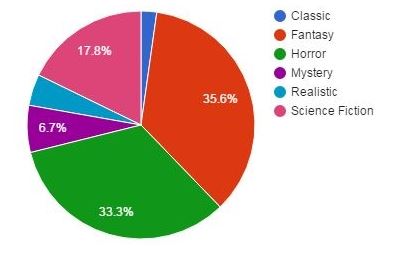
- Using a Google Form, students generated a list of their favorite genres of fiction. They then voted on the one genre from the list that they'd use for a genre study and how the hero's journey unfolds in the narrative. This year's choice: fantasy fiction.
- Individuals proposed novels to use for the study by creating "billboards" and adding them to a class slideshow so that students could vote for the top six choices.
- Book clubs (literature circles) were formed for each of the 6 novels. Each book club determined their own reading schedule, developed a contract conveying group norms, members' roles, and expectations, and met at least once a week to discuss the novel. Students were given class time to read (individually or in groups, depending on the group's agreed-upon norms) and annotate with the purpose of identifying stages of the hero's journey and whatever archetypes they could find.
- Book clubs were tasked with completing a slideshow by the end of the three weeks that detailed the fantasy novel's hero journey and archetypes. This essentially created the conditions that made group discussion more purposeful in that members had to agree to which hero stages they would include in their group's presentation.
- As groups engaged in their genre study, they were given a number of writing prompts for creating their own hero journeys. These "zero drafts" were shared on their blogs and during "open mic" sessions at the end of class, which-- in turn, fostered a supportive culture for sharing and providing constructive feedback on ideas.
| WriteAbout.com is where our blogs live |
- NaNoWriMo was introduced by sharing fun videos about the annual event created by experienced NaNoWriMo participants.
- A parent letter was sent home introducing NaNoWriMo with a request for prize donations (for word wards, goal achieving, etc)
- Students engaged in lessons and activities provided by the NaNoWriMo site along with a free student booklet. I used most of it but modified the lessons so that they were on Google docs rather than an edit-able pdf file.
- As the Book Clubs went into their final stretch (mid-October), students chose one of their stories (from their collection of zero drafts) to further develop by creating character profiles and by experimenting with different ways of organizing plot outlines.
LAST WEEK OF OCTOBER
- Students were introduced to the NaNoWriMo site as well as the Young Writer's Program site (geared specifically toward teens).
- Students had a couple of practice writing sprints to guage how many words they could type within the span of an hour, and-- using those numbers, determined which writing goal they would choose: 15K, 30K, or 50K, which was then broken down into daily word count goals (500, 1000, or 1667).
- Calendars were distributed to help time manage and keep track of word counts and goals.
- Contracts were signed (the contracts NaNoWriMo provides in the student booklets are both funny and reassuring to first-timers).
- In the final days of October, having already developed the concept and characters for their novels, students created book covers that included graphics and an enticing blurb for the back cover. These were posted on a discussion board to generate excitement and to provide positive feedback as a writing community.
| Example Book Cover |
- On the last day of October, students were encouraged to bring a writing totem to school for the start of NaNoWriMo (totem = good luck charm). Some of the totems were profoundly personal. Nicole chose to write the story of her grandfather's army days and so her totem was his actual dog tag (more stories like that to come...)
![]() |
| Students' totems from both classes |
I hope this has served to help rather than overwhelm. As soon as I have some time freed up, I'll add links to most of what's listed above. In the meantime, if there's any particular detail you'd like me to elaborate on in a separate post or a resource you'd like to have access to, please let me know in the comments.
Next: Instructional Supports Provided to Students during NaNoWriMo
Tuesday, October 31, 2017
Diving Into NaNoWriMo as a First-Timer (Whilst Holding a Hundred Young Writers' Hands)
This is part of a SERIES of posts about engaging my students in National Novel Writing Month, a.k.a. NaNoWriMo, a challenge to complete the manuscript for a novel in the course of a month.
Happy NaNoWriMo Eve!
Tomorrow marks the first day of the 18th annual National Novel Writing Month, a "fun, seat-of-your-pants approach" to writing the complete first draft of a novel in 30 days.
I've only seventeen regrets in my life and they are that I've missed NaNoWriMo for the past seventeen years. I'm done procrastinating and, b'gosh, I'm going to write that novel that's been knockin' on my belly's door, the one that costs me hundreds of dollars each year in therapy co-pays for ignoring it! Time to clear up this creative constipation. This is happening.
I'll be a newbie-- not just as a novel writer, but as a teacher who's holding the hands of her entire sophomore Humanities class as we all take the proverbial leap en masse.
Oh, geesh...I'm realizing the full weight of this endeavor as I write. Goddess help me. Rubber duckie totem, where art thou?
Ah, there you are. I'll be okay now. So I'm a little petrified. That's normal, right? It's probably good that, whilst modeling the writing process, I'm able to also model the fear and trepidation that comes with setting a daily word count of 1667 and committing to a total of fifty thousand words [rubs duckie].
I'm thinking if I crank out a few short blogs each week to share my experience, it might be useful to other first-time educators who are going in as blind as I am.
It won't be a perfect novel. It won't be even the least bit pretty. Hell, it might not even get done, but if I'm asking a hundred teens to try it and I'm cheering them on and lighting all kinds of fires beneath their feet, the least I could do is jump in there with them so we can all suffer, bleed, laugh, and celebrate together.
It's the write thing to do.
Part II: The Nuts and Bolts of Preparing My Students for NaNoWriMo
Happy NaNoWriMo Eve!
Tomorrow marks the first day of the 18th annual National Novel Writing Month, a "fun, seat-of-your-pants approach" to writing the complete first draft of a novel in 30 days.
I've only seventeen regrets in my life and they are that I've missed NaNoWriMo for the past seventeen years. I'm done procrastinating and, b'gosh, I'm going to write that novel that's been knockin' on my belly's door, the one that costs me hundreds of dollars each year in therapy co-pays for ignoring it! Time to clear up this creative constipation. This is happening.
I'll be a newbie-- not just as a novel writer, but as a teacher who's holding the hands of her entire sophomore Humanities class as we all take the proverbial leap en masse.
Oh, geesh...I'm realizing the full weight of this endeavor as I write. Goddess help me. Rubber duckie totem, where art thou?
Ah, there you are. I'll be okay now. So I'm a little petrified. That's normal, right? It's probably good that, whilst modeling the writing process, I'm able to also model the fear and trepidation that comes with setting a daily word count of 1667 and committing to a total of fifty thousand words [rubs duckie].I'm thinking if I crank out a few short blogs each week to share my experience, it might be useful to other first-time educators who are going in as blind as I am.
It won't be a perfect novel. It won't be even the least bit pretty. Hell, it might not even get done, but if I'm asking a hundred teens to try it and I'm cheering them on and lighting all kinds of fires beneath their feet, the least I could do is jump in there with them so we can all suffer, bleed, laugh, and celebrate together.
It's the write thing to do.
Part II: The Nuts and Bolts of Preparing My Students for NaNoWriMo
Monday, February 15, 2016
Differentiate with Digital Tools: Five Free Web Apps
This is a presentation I gave for my district-sponsored Digital Learning Conference.
I love sharing at this local conference each year because it's teachers teaching teachers! If it helps others, all the better.
The link to the slideshow is HERE should you want to comment or ask questions.
Sunday, December 27, 2015
Poem: Ode to a Graduate Task Left Undone
Share the literacy story of one of your students,
asked the handout found in a dusted-off binder
marked "Grad School Assignments"
My cohort had mapped out their own literacy journeys;
a charge that left its reflective mark, even ten years on.
Harold's Purple Crayon,
lyrics to a holiday song I insisted was my own,
my name etched into the wood of grandma's basement wall,
The Marvel universe's flawed, self-sacrificing heroines,
anything by Stephen King,
and then the start of my own bookmaking.
I would ask my students, one by one,
anticipating rich maps, much like my own.
I dunno. I just did, I guess.
Do you remember the very first book you read
over and over again?
Um, no. Wait...no.
Did anyone read to you as a child?
Um, no. Wait...no.
What do you write when it's not for school?
(silence)
Was I just strange to them,
this teacher asking questions about books and reading?
Was I unclear about the purpose so they wouldn't feel
their answers would be judged?
Were the questions wrong?
I went back to my notes on the book, Growing Up Literate,
looking for ethnographic methodology
and found notes on what surprised me
about the rich literate lives of poor families from that study:
The letters to themselves and to one another,
love notes,
reminders, lists of things to do,
the everyday quiet ways they made meaning of the world-
ways that mattered when navigating the day to day
unnoticed, usually, like
Crayola homes surrounded by bright green living things
stick figures connecting in close proximity suggesting
a beautiful smallness of the world
everything ordinary a thing of intimacy
and comfort
-a children's code
we all once knew.
I couldn't put words to why (I still can't)
but I knew the task had to go undone
that's what happened, and now a decade later,
here's its poem.
Sunday, April 5, 2015
Letter Grades Inhibit Deep Learning. They Must Die.
In the world of school, grades are supposed to represent where a student is at in relation to mastery. A = spot on, F = far from it. Well, that's the idea, anyway, but I have a hunch that's kind of rare.
My guess is that it's more likely grades are used as leverage, lorded over students as a form of academic "justice"; rewards go to the high-achievers while punishment is doled out to the offending slackers who didn't get the work done.
When it comes to what we know about the nature of learning, though, letter grades fall short in fostering, within our students, a willingness to think about, discuss, and reflect on their learning. For the most part, there's no solid sense of the why behind them or what was learned as a result, so it's no wonder that high-achievers are hyper-focused on them and struggling students avoid them (and the loser-tag they exact).
Learning is a process that needs choice, voice, reflection, timely feedback, and opportunities to revise in order to grow, but points awarded for simply completing tasks (we'll call them giddyap grades) convey the opposite. They're more about getting things done so they likely represent a student's level of agency rather than where they're at with the content. The problem is that no one would really know for sure, including the student, who sees an A, and thinks "success!" and sees the F and thinks, "Oh dang, no cell phone for a month."
Dan Pink makes the case that the carrot and stick approach motivates people when the work is menial, rote, or mechanical. In other words, if the task doesn't require any specialized knowledge or ability, rewards and punishments increase motivation and productivity. But when the tasks require even the most rudimentary cognitive challenge, increased incentives have the opposite effect.
Pink's target audience is the tech industry, so he pushes to dispel the myth that innovation is driven by monetary incentives. Money is a motivator in that if you don't pay people enough, it's likely they won't be motivated. However, the best use of money as a motivator, the studies suggest, is to take the issue of it completely off the table. Pay people enough so that the monetary reward is not perceived as conditional. When this happens, three factors emerge that seem to drive people toward increased productivity, innovation, and satisfaction around the work they do. Those factors are autonomy, mastery, and purpose.
Autonomy = the desire to direct our own lives
Mastery = the urge to get better at something that matters
Purpose = the yearning to do what we do in the service of something larger than ourselves
Now, take money out of the equation and replace it with grades. Notice how Pink's definition for mastery jives with growth mindset, where all endeavors are viewed as practice, and where failure is merely an opportunity to learn rather than grounds for punishment. If I can make mastery the focus of the work we do, but do so within contexts that are meaningful to my students (purpose), where they set their own goals, work at their own pace, and assess their own gains (autonomy), then yes, I can make that almighty letter grade work to my advantage by challenging students to give themselves the grades they deserve. They'd use their body of work, feedback, and their reflections to make that case. That would be the only time grades would come into play and it would be on their terms.
My gut and my experiences tell me this is possible and it's the right direction for me to move toward. It's already being pioneered by teachers who are generously sharing their journeys and inspiring others to do so (see Starr Sackstein here and Mark Barnes here).
I don't call this blog EduNut for nothin'. I'm obsessed with teaching, and so a lot of my personal time is spent striving to build on what I know. It's a weekend morning and I'm wrestling with pedagogy on the pages of my blog, obviously driven by a sense of purpose and a desire for mastery of my craft. Pink's ideas resonate with me because I can easily see how they play out in my own learning. I want to replicate that for students.
I'll be transitioning to as close as I can come to a "no grades" assessment plan for next year. I still have to ultimately place letters into that grade book at the end of each term, but at least I can do so in a way that honors my students' work and progress more authentically than not.
Beginning in late-May, I'll be blogging and vlogging to make it all transparent as best I can (Sackstein-style). I'm excited and nervous at the same time. In the past, those two feelings together have always preceded the crossing of a meaningful threshold in my life or career. 'Tis a good sign.
My guess is that it's more likely grades are used as leverage, lorded over students as a form of academic "justice"; rewards go to the high-achievers while punishment is doled out to the offending slackers who didn't get the work done.
When it comes to what we know about the nature of learning, though, letter grades fall short in fostering, within our students, a willingness to think about, discuss, and reflect on their learning. For the most part, there's no solid sense of the why behind them or what was learned as a result, so it's no wonder that high-achievers are hyper-focused on them and struggling students avoid them (and the loser-tag they exact).
Learning is a process that needs choice, voice, reflection, timely feedback, and opportunities to revise in order to grow, but points awarded for simply completing tasks (we'll call them giddyap grades) convey the opposite. They're more about getting things done so they likely represent a student's level of agency rather than where they're at with the content. The problem is that no one would really know for sure, including the student, who sees an A, and thinks "success!" and sees the F and thinks, "Oh dang, no cell phone for a month."
Dan Pink makes the case that the carrot and stick approach motivates people when the work is menial, rote, or mechanical. In other words, if the task doesn't require any specialized knowledge or ability, rewards and punishments increase motivation and productivity. But when the tasks require even the most rudimentary cognitive challenge, increased incentives have the opposite effect.
Autonomy = the desire to direct our own lives
Mastery = the urge to get better at something that matters
Purpose = the yearning to do what we do in the service of something larger than ourselves
Now, take money out of the equation and replace it with grades. Notice how Pink's definition for mastery jives with growth mindset, where all endeavors are viewed as practice, and where failure is merely an opportunity to learn rather than grounds for punishment. If I can make mastery the focus of the work we do, but do so within contexts that are meaningful to my students (purpose), where they set their own goals, work at their own pace, and assess their own gains (autonomy), then yes, I can make that almighty letter grade work to my advantage by challenging students to give themselves the grades they deserve. They'd use their body of work, feedback, and their reflections to make that case. That would be the only time grades would come into play and it would be on their terms.
My gut and my experiences tell me this is possible and it's the right direction for me to move toward. It's already being pioneered by teachers who are generously sharing their journeys and inspiring others to do so (see Starr Sackstein here and Mark Barnes here).
I don't call this blog EduNut for nothin'. I'm obsessed with teaching, and so a lot of my personal time is spent striving to build on what I know. It's a weekend morning and I'm wrestling with pedagogy on the pages of my blog, obviously driven by a sense of purpose and a desire for mastery of my craft. Pink's ideas resonate with me because I can easily see how they play out in my own learning. I want to replicate that for students.
I'll be transitioning to as close as I can come to a "no grades" assessment plan for next year. I still have to ultimately place letters into that grade book at the end of each term, but at least I can do so in a way that honors my students' work and progress more authentically than not.
Beginning in late-May, I'll be blogging and vlogging to make it all transparent as best I can (Sackstein-style). I'm excited and nervous at the same time. In the past, those two feelings together have always preceded the crossing of a meaningful threshold in my life or career. 'Tis a good sign.
Thursday, April 2, 2015
Note to Self: Keep Asking Why It Is You Teach
I remember the moment I chose teaching as a career. I was two years into college and had to declare a major. Among the choices, teaching offered the greatest potential for positively impacting others. That was the clincher.
I'd love to be able to think pure altruism was what has sustained my desire to teach these last fifteen years, but that would mean I would've expected nothing in return for my time and energy, and that was just not the case. I'm hardly as selfless as that. Sure, I've depended on the paycheck, but ultimately, I've expected at least the sense that my time as a teacher meant something to others. I didn't need to see it, I just needed to feel it. I didn't even need to know that others saw it. I just wanted to be sure for myself.
Fortunately, I have been, and here's why:
1. The odds were pretty damn good! I've taught close to 100 students each year, which meant close to 1500 students passed through my classroom. Given there are 180 days in the school year, that would mean I had 180 days with each student where there was a very good chance of having impacted them in a positive way (since that was what motivated me).
2. I've had some great teachers whom I quietly admired and even revered. They impacted me in ways they could have never known (well, okay-- some do know now thanks to the modern-day magic of Facebook, where everyone you've ever known somehow finds you). If even one of my ~1500 students took a piece of me along on their life's journey, in spirit, it'd be pretty cool. I've been fortunate enough to be told this was the case by former students.
3. Lastly, there have been those moments where I sensed it; a personal connection that was made, a mutual understanding, a shared experience, time, patience, and honesty acknowledged. Even if they didn't get it, I did. Maybe some day, they would, too, the way I could only do in retrospect when thinking about my own teachers and how they quietly left their imprint on my teacher-being.
Interestingly enough (to me, anyway), I care less about all of that. What sustains me as a teacher has shifted quite a bit. Where before it was about using my "superpowers" to inspire and to help students become self-aware (that being the "positive impact"), now I'm more inclined to want my experiences and my knowledge to be of value. If there's an impact to be made, it's on their learning, and I feel much more equipped to do that given the depth of knowledge I've acquired. It's a quieter impact, but one that's more likely to endure and have a direct & positive impact on their self-concept.
Also, there's no denying that all this time, I've been impacted by my students on so many levels; as a parent, a learner, a teacher, and as a fellow human being. For that reason, I have a sense that in a few years, even legacy will cease to be a factor in what fuels me. If it's anything like parenthood, what will mean the most will be the sum total of those quieter moments where we all ran outside under the first snowfall to catch snowflakes on our tongues (high schoolers, these are), or all the times we found ourselves in mutual awe of things serendipitously stumbled upon, or that made us appreciate the mysteries of our own human nature.
I feel the start of that shift, and I embrace it.
I'd love to be able to think pure altruism was what has sustained my desire to teach these last fifteen years, but that would mean I would've expected nothing in return for my time and energy, and that was just not the case. I'm hardly as selfless as that. Sure, I've depended on the paycheck, but ultimately, I've expected at least the sense that my time as a teacher meant something to others. I didn't need to see it, I just needed to feel it. I didn't even need to know that others saw it. I just wanted to be sure for myself.
Fortunately, I have been, and here's why:
1. The odds were pretty damn good! I've taught close to 100 students each year, which meant close to 1500 students passed through my classroom. Given there are 180 days in the school year, that would mean I had 180 days with each student where there was a very good chance of having impacted them in a positive way (since that was what motivated me).
2. I've had some great teachers whom I quietly admired and even revered. They impacted me in ways they could have never known (well, okay-- some do know now thanks to the modern-day magic of Facebook, where everyone you've ever known somehow finds you). If even one of my ~1500 students took a piece of me along on their life's journey, in spirit, it'd be pretty cool. I've been fortunate enough to be told this was the case by former students.
3. Lastly, there have been those moments where I sensed it; a personal connection that was made, a mutual understanding, a shared experience, time, patience, and honesty acknowledged. Even if they didn't get it, I did. Maybe some day, they would, too, the way I could only do in retrospect when thinking about my own teachers and how they quietly left their imprint on my teacher-being.
Interestingly enough (to me, anyway), I care less about all of that. What sustains me as a teacher has shifted quite a bit. Where before it was about using my "superpowers" to inspire and to help students become self-aware (that being the "positive impact"), now I'm more inclined to want my experiences and my knowledge to be of value. If there's an impact to be made, it's on their learning, and I feel much more equipped to do that given the depth of knowledge I've acquired. It's a quieter impact, but one that's more likely to endure and have a direct & positive impact on their self-concept.
Also, there's no denying that all this time, I've been impacted by my students on so many levels; as a parent, a learner, a teacher, and as a fellow human being. For that reason, I have a sense that in a few years, even legacy will cease to be a factor in what fuels me. If it's anything like parenthood, what will mean the most will be the sum total of those quieter moments where we all ran outside under the first snowfall to catch snowflakes on our tongues (high schoolers, these are), or all the times we found ourselves in mutual awe of things serendipitously stumbled upon, or that made us appreciate the mysteries of our own human nature.
I feel the start of that shift, and I embrace it.
Wednesday, April 1, 2015
Wabi-Sabi Teacher = Beautifully-Flawed
A couple of decades ago, while learning how to spin a clay pot, an art instructor told me about wabi-sabi, a Japanese art form that conveyed the beauty of impermanence and time's impact on objects. Picture a sculpted piece of driftwood along the beach, or a smoothed-over river stone; both are wabi-sabi-ware, organically worn and shaped by nature's geologically-slow hand. The instructor applied it to the imperfections in my clay pot noting that it gave it a wabi-sabi feel. I didn't think too much about it, except that I felt relieved she saw the asymmetry of my piece a thing of beauty rather than a newbie flaw. It was a natural part of my process as an artist, she said, and that's what made it special.When I first started teaching fifteen years ago, I could've used someone like that art teacher to tell me I didn't have to be perfect right out the gate. We enter into our first classroom with a head full of theory and meticulously-constructed "units of study", and it doesn't take much more than a spit wad hurled across the room to realize we're going to have to adapt to survive. When it happened to me, the sense of fear and urgency was strong enough to put me into overdrive.
As a result, I would spend a good amount of time and energy those first years trying to reach edu-nirvana, that state where all those rock star teachers in the movies were at. You know who I mean, the ones who stood and delivered atop desks and, at the risk of life, job, and limb, challenged students to positively disrupt their lives using education as the way to do it. I wanted to be that teacher, as many young teachers did. It wasn't hard to shed that myth after a year or two of experience, but the motivation for impacting others and the passion for teaching remained.
Now that I'm at the mid-point of my career as a teacher, I find myself thinking about that clay pot. Teaching is a craft, like ceramic art. There is no higher place to be than where we are when we're knee-to-knee with students as their mentors and guides.
We can embody wabi-sabi, not only in our aesthetic (gray hairs and the wrinkles of a smile), but in our ways of "being", too. I see it in artists and teachers who value process over product. I sense it in those who accept their own finite natures with grace and brevity, making sure they're "present" for their students; honoring their learning journeys with patience and compassion. It's in anyone who seems to be in sync and at peace with nature's rhythms.
This is what I wish to remember as I embark on the second half of my journey as a teacher: that I am that stone, newly-aware of being less jagged in all the right places, and I embrace all that which makes me beautifully flawed.
Monday, October 13, 2014
Idea: Easing into the Launch of a Class Blog
For our first post, I had students collect ten images (self-created or not) representing different aspects of their lives or personalities.
They then created a slideshow with the images and embedded it into the main page of their blog. The only requirements: (1) images must be "appropriate" enough to show a roomful of grand-folks, and (2) no text. No text piques readers' curiosity and prompts them to comment with their questions, thereby inspiring the blogger to draft another post in response.
The next day, I had students create a list of "Top Ten" (any topic of their choosing). I used my own blog as an exemplar, sharing my list of "Top Ten Moments of Bliss" (in no particular order):
Happy blogging!
P.S. I use Google Sites as a platform for our class blog.
If you'd like a template that you can simply copy, leave a comment and I'll kick it your way.
- Snowboarding with Tommy, my nephew
- Receiving my Bachelor's degree- my whole family was there.
- Falling in love and realizing it for the first time
- Rock climbing, making it to the top, breathing, and then turning around to take in the view
- Biking down the Sandia Crest trail
- Backpacking around Cuba, up to the mountain valleys (lush)
- Bungee jumping off of a New Zealand mining bridge (where bungee jumping first originated)
- Walking along the Nova Scotian coastline
- Waking up on mornings after a big trek along the New Zealand coast (Akaroa)
- Floating on a river through a cave- looking up and seeing glow worms (they looked like stars!)
Happy blogging!
P.S. I use Google Sites as a platform for our class blog.
If you'd like a template that you can simply copy, leave a comment and I'll kick it your way.
Monday, August 11, 2014
Welcome to Being Human- A Syllabus Intro to Humanities
Syllabus Intro to Humanities, Gr 10:
Once upon a time, roughly 5 billion years ago, a gravitational collapse gave birth to the solar system you're presently spinning around in. At first, things were a mess. Most of the cosmic matter gathered and fused at the core while the rest of it scattered outwardly into a flat, orbiting disc of debris.
As that debris field spun, it slowly (over the course of a billion years) started massing into clumps, thereby forming a number of stars and satellites, one of which we're all sitting on as it orbits its own star (the sun).
A billion years later, after things cooled down a bit on this home-planet, conditions were ripe for simple life forms to emerge, and eventually they evolved into increasingly-diverse complex organisms. It took mammalian life billions more years to emerge, but the planet was still hostile to larger forms of life, so there were a few mass extinctions. Each time, though, life continued to evolve.
Tens of millions of years after the last of those mass extinctions (that of the dinosaurs), ape-like animals began to emerge and at some point, they adapted by standing upright on two legs, thus heralding an evolutionary chain of events that would lead to the emergence of the species you, yourself, are a part of. That species' brain slowly grew and evolved to become self-aware of its own existence, and with the use of language (this one, the one you're using as you read this), created words to carry and record ideas from one generation to the next, words such as "human," which conveyed a category of life separate from all the rest.
Which brings us to this moment, whereby we find ourselves here in this class focusing on that very thing we call human. Welcome to World Studies, fellow human beings. Here, we'll explore what it means to be human and, if things go as planned, you may see more clearly your part in the ongoing story. ■
Subscribe to:
Posts (Atom)